

Buying a good phone no longer means spending a thousand dollars. In 2026, the under $300 category is where the smart money goes, because mid-range processors, bright OLED screens, and multi-day batteries have quietly moved down in price. The trick is knowing where manufacturers cut corners — and which corners you will actually notice.
This guide explains what to prioritise, what to ignore, and how to choose a budget phone that still feels fast two years from now, without paying for flagship features you will never use.
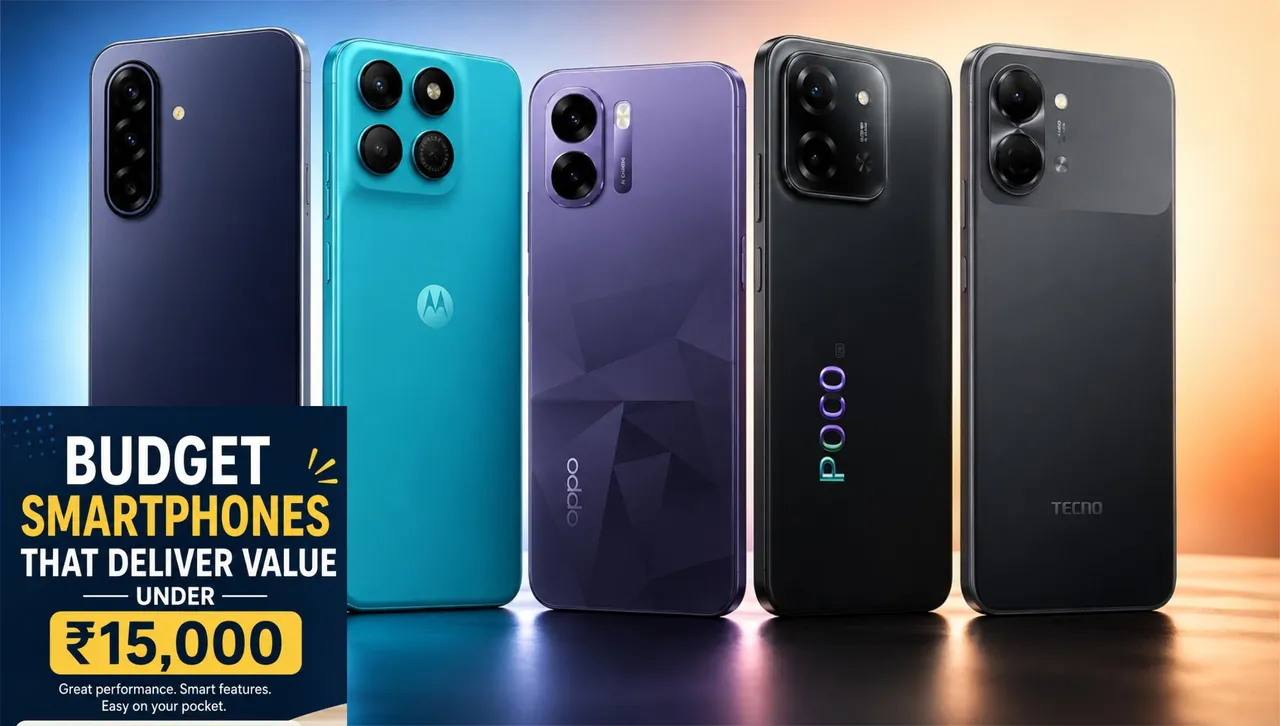
What $300 Should Get You in 2026
A fair budget phone today should give you a 120Hz OLED or high-quality LCD display, at least 8GB of RAM, 128GB of storage, a 5,000mAh battery or bigger, and fast charging of 25W or more. Cameras have improved too: a good main sensor with optical stabilisation matters far more than a long list of extra low-resolution lenses.
Software support is the hidden dealbreaker. Look for at least three years of security updates, ideally more. A slightly slower phone that stays secure and updated will age better than a faster phone abandoned after a year.
5G is now standard in this price range in most regions, but do not overpay for it if coverage in your area is still limited. Battery life, screen quality, and updates will affect your daily experience far more.
The Features Worth Paying For
Spend your budget on the screen first. You look at it for hours every day, so brightness outdoors and smooth scrolling matter more than a small processor difference. Second, battery and charging: a big battery that charges in about an hour saves more frustration than any camera trick.
Third, storage. 128GB is the minimum in 2026 if you shoot photos and video. If the phone has a microSD slot, that is a genuine bonus for media-heavy users — but internal storage is still faster, so do not buy 64GB expecting the card to fix everything.
Finally, check the basics people forget in the shop: a reliable fingerprint reader, decent stereo speakers if you watch a lot of video, and an IP rating for splash resistance if you use your phone outdoors or in the kitchen.
Where Budget Phones Cut Corners
Most compromises are predictable. Video recording is usually weaker than photos, especially at night. Wireless charging is rare. The frame may be plastic instead of metal, though good plastic often survives drops better than glass.
Ultrawide and macro cameras on budget phones are often disappointing. Judge a phone by its main camera in real indoor light, not by how many lenses it advertises. Also watch out for heavy pre-installed apps. A clean software experience will feel faster over time than a phone with slightly better benchmark numbers and a cluttered interface.
Gaming is another dividing line. Casual games run fine on almost anything now. If you play demanding 3D games daily, look for a model known for good cooling and a stronger graphics chip, and expect to trade something else, like camera quality, to stay under $300.
How to Choose for Your Kind of Use
For photography lovers, prioritise a main camera with stabilisation and a brand with a good track record for image processing. Read sample photos taken indoors and at night, not only sunny marketing shots.
For battery-first users — delivery riders, field workers, travellers, and students on long days — choose the biggest battery, efficient processor, and fastest wired charging. A slightly thicker phone is a fine trade for finishing the day at 40 percent.
For students and everyday users, balance matters most: good screen, enough RAM for multitasking between classes, notes, and messaging, and long update support so the phone safely lasts the whole degree.
For parents buying for kids or as a family spare, durability, simple software, and a replaceable low cost matter more than peak performance. A good case and screen protector will do more than an expensive model.
Smart Buying Tips That Save Real Money
Wait for the first price drop. Budget phones often fall 15 to 25 percent within three to four months of launch, making last season’s best model the best value of all. Compare the slightly older model against the new one; the difference is often just a fresh colour and a minor camera tweak.
Buy unlocked when you can, so you are free to choose cheaper plans and keep the phone if you change networks. Check which network bands the exact model supports in your country, especially if importing.
Also budget honestly for the full cost: case, protector, and possibly a fast charger if one is not in the box. A $270 phone that needs $40 of accessories is really a $310 phone.
Our Honest Advice for 2026
Do not chase the longest spec list. Choose the phone with the best screen, battery, camera main sensor, and update promise that fits your budget, then stop comparing. Almost every well-reviewed under $300 phone from a known brand in 2026 is good enough for messaging, maps, photos, banking, and video — the daily tasks that actually matter.
If your current phone still receives security updates and only needs a new battery, repairing it may be the smartest budget move of all. But when it is time to replace, this is a great year to spend less and still get a phone that feels modern, fast, and dependable for years.
Conclusion
The best budget smartphone under $300 is not the one with the most cameras or the loudest launch offer. It is the one whose screen you enjoy, whose battery ends the day with room to spare, and whose software will still be supported when you are ready to upgrade again. Use the checklist in this guide, compare two or three models in person if you can, and buy on value — not hype.