

Action cameras have come a long way from shaky, low-resolution footage and fragile plastic shells. Today’s budget models shoot crisp 4K video, survive drops and dives, and pack stabilization that makes handheld footage look professionally smooth. You no longer need to spend flagship money to capture a surf trip, a bike ride, or a weekend hike in impressive quality. Here are the best budget action cameras in 2026 that deliver real adventure-ready performance without the premium price tag.
What to Look For in a Budget Action Camera
Before you buy, it helps to know which specs actually matter — and which ones are just marketing noise. Video resolution and frame rate: 4K at 30 frames per second is the baseline for a good budget camera in 2026, and several models now offer 4K at 60fps. Higher frame rates matter if you plan to slow footage down for action replays. Do not be fooled by inflated “8K” claims on ultra-cheap cameras — the sensor and processor behind the number matter far more than the number itself. Stabilization: Electronic image stabilization (EIS) is the single biggest quality upgrade in recent years. A camera with good stabilization turns bumpy mountain-bike footage into smooth, watchable video. Look for models that advertise flow-state or gyroscopic stabilization rather than basic digital smoothing. Waterproofing and durability: Most budget action cameras are waterproof to around 10 metres without an extra case, which covers swimming, snorkelling, and rain. If you plan to dive deeper, check whether a dive housing is available and affordable. Battery life and accessories: Budget cameras typically record 60 to 90 minutes per charge at 4K. Removable batteries are a big plus — carrying a spare is cheaper than cutting a shoot short. Also check what mounts come in the box: a basic set of adhesive mounts and a frame should be included.
1. DJI Osmo Action 4 (on sale) — The Best Value Overall
The Osmo Action 4 is last year’s flagship, which is exactly why it is this year’s best budget buy. Frequent discounts have pushed it into budget territory, and it brings a larger sensor than most rivals, which means noticeably better low-light footage — think sunset rides and dim indoor clips that do not dissolve into noise. Its magnetic quick-release mount makes swapping between a helmet, chest mount, and handlebar mount genuinely fast, and the dual touchscreens (front and back) make framing selfies and vlogs easy. Battery life is solid at around 2.5 hours of 1080p recording, and the waterproofing holds to 18 metres without a case. If you can find it at a discount, this is the camera to beat.
2. GoPro Hero 11 Black (discounted) — The Reliable Classic
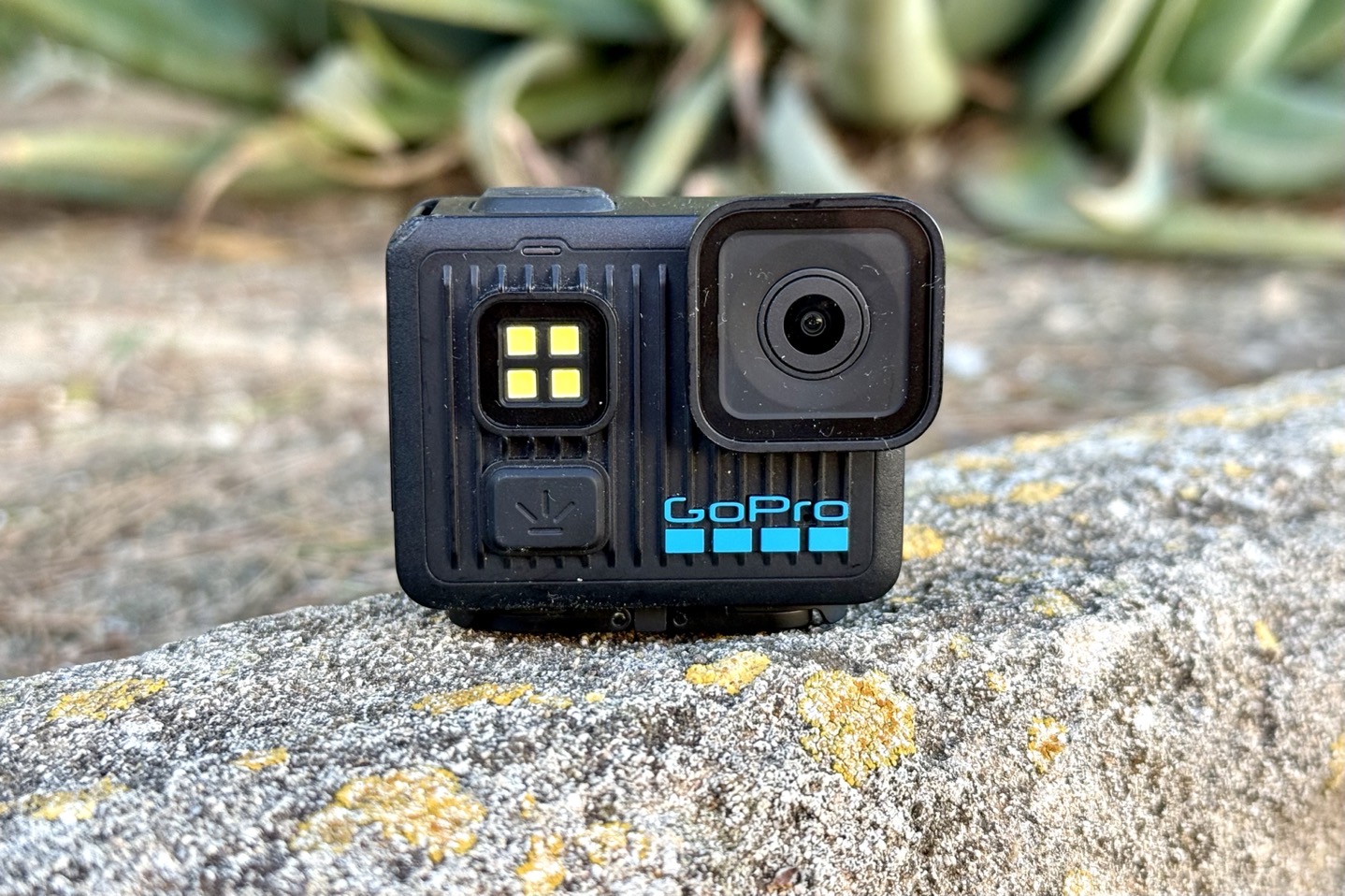
Like the DJI, the Hero 11 Black benefits from being one generation old. GoPro’s HyperSmooth stabilization remains among the best in the business, and the huge accessory ecosystem means you will find a mount for literally anything — surfboards, drones, dogs, you name it. Video quality is excellent in daylight, and the 10-bit colour option gives you more flexibility if you edit your footage. The main trade-offs are shorter battery life than the DJI (around 70 minutes at 4K) and a slightly fiddly touch interface. But if you want the safest, most supported choice, this is it.
3. Insta360 GO 3S — The Tiny One
The GO 3S is barely bigger than your thumb, and that is the whole point. It magnetically clips to a hat, a lanyard, or a chest pendant, so you can capture hands-free footage without strapping a box to your head. The 4K video is surprisingly good for something this small, and the included Action Pod adds a preview screen, extra battery, and a tripod mount. It is not a full replacement for a traditional action camera — battery life per charge is shorter, and there is no removable battery — but for travellers and creators who want the most discreet camera possible, nothing else comes close at this price.
4. Akaso Brave 8 Lite — The True Budget Pick
If your budget is genuinely tight, the Akaso Brave 8 Lite is the pick that proves you do not need to spend much at all. It shoots 4K at 30fps, has usable electronic stabilization, is waterproof to 10 metres, and comes with a generous accessory kit in the box — mounts, spare batteries, and a remote. Image quality will not match the DJI or GoPro in tricky light, and the app experience is more basic. But for the price of a nice dinner, you get a camera that handles beach days, bike rides, and family adventures with ease. It is also a smart choice as a second camera or a first camera for a teenager.
5. DJI Osmo Action 3 (used or clearance) — The Bargain Hunter’s Pick
Still available on clearance and the used market, the Action 3 shares much of the Action 4’s DNA: magnetic mounts, dual screens, and strong stabilization. The sensor is smaller, so low-light footage is a step behind, but in daylight the difference is hard to spot. If you find one well under the Action 4’s price, it is a steal.
Tips for Better Action Camera Footage
Whichever camera you choose, a few habits make a big difference. Shoot in the highest frame rate your camera allows for fast action — you can always slow it down later. Clean the lens before every session; a single water spot ruins a clip. Use a floaty grip near water, because even waterproof cameras sink. And always carry a spare battery and a microSD card with fast write speeds (V30 or better) so the camera never stops mid-adventure.
Conclusion
You do not need a flagship budget to shoot great adventure footage in 2026. The discounted DJI Osmo Action 4 is the best all-rounder, the GoPro Hero 11 Black is the safest classic, the Insta360 GO 3S is the most discreet option, and the Akaso Brave 8 Lite proves that a genuinely capable action camera can cost very little. Decide how much low-light quality and battery life matter to you, pick the camera that fits, and get out there — the best footage comes from the camera you actually take with you.